Minimal Beauty with Flower Embroidery Review
As an embroidery designer who spends weekends hunched over a sewing machine and weekdays setting up tables at craft fairs, I have learned that the difference between a design that sits on a shelf and one that flies off the table often comes down to simplicity. We live in an era of visual noise, where customers are bombarded with loud patterns, complex graphics, and cluttered aesthetics. That is why when I evaluate a new machine embroidery design, I am always looking for quiet elegance. This week, I put Minimal Beauty with Flower under the microscope to see if it has what it takes to become a staple in my booth lineup.
First Impressions: The Power of Minimalism
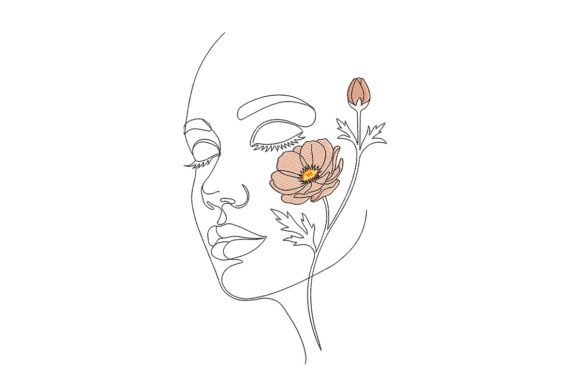
The title alone suggests a specific mood, and the description confirms it. "Express quiet elegance" is not just marketing fluff; it is a directive for the maker. When you look at the concept of a graceful one-line female face paired with a delicate flower, you immediately understand the aesthetic. It is modern, minimal, and undeniably premium. In the world of handmade goods, this style resonates because it feels sophisticated without being pretentious.
For a craft fair product, this design hits the sweet spot. It is not so bold that it overwhelms the garment, nor is it so subtle that it gets lost in the background. It offers a sense of refined taste that appeals to the buyer who wants something unique but wearable. The single-line art style is particularly effective because it mimics the hand-drawn quality that consumers crave in handmade products, even though it is executed by a computer. This contrast—digital precision meeting organic simplicity—is exactly what drives engagement at a market booth.
Product Application: Where Does It Shine?
One of the first questions I ask myself is, "What can I actually put this on?" A versatile embroidery file needs to work across multiple categories. Here is how Minimal Beauty with Flower performs on key items:
- Tote Bags: This is perhaps the strongest application. A simple canvas tote bag is a blank canvas. Placing the one-line face and flower near the handle or centered on the front creates an instant statement piece. It elevates a basic accessory into a tote bag design that looks like it belongs in a high-end boutique.
- Aprons and Tea Towels: For the kitchen enthusiast, this design adds a touch of grace to daily routines. On a white linen apron, the contrast will be striking. However, on a textured tea towel, caution is required (more on that below). It works beautifully as a small accent near the hem or cuff.
- Caps and Patches: The compact nature of the design makes it ideal for structured caps. Because it does not require massive fill stitches, it maintains its shape well on curved surfaces. It also translates perfectly to iron-on patches, allowing customers to add their own flair to denim jackets or backpacks.
- Pillow Covers and Small Pouches: These are high-margin impulse buys. A small zippered pouch with this minimalist artwork feels luxurious. It photographs exceptionally well for online listings, making it a favorite for Etsy sellers looking for clean, attractive imagery.
Production Practicality and Sales Appeal
From a business perspective, efficiency is key. Can I produce this in batches? Yes. The design’s lack of dense, heavy stitching means it runs faster than ornate baroque styles. This reduces wear on your machine and speeds up production time, which directly impacts your profit margin. Furthermore, the clean lines make it easy to photograph. When you create a printable mockup for your digital storefront, the design stands out clearly against various backgrounds, ensuring that your small shop product looks professional and appealing.
Customer attention is captured by clarity. At a busy craft fair, a customer might only glance at your table for three seconds. A complex design might look like a blur from a distance. Minimal Beauty with Flower, however, reads instantly. The negative space allows the eye to rest, creating a calming effect that draws people in. It signals that the item is thoughtfully made, enhancing the perceived value of the finished product.
Critical Considerations for the Maker
While this design is promising, no embroidery project is without its pitfalls. As a professional, I must highlight areas where errors can occur. Even minimalist designs have technical requirements.
Stitch Density and Fabric Texture
You must inspect the stitch density carefully. While the lines are thin, they need enough structure to stand up on the fabric. If the density is too low, the stitches may flatten out and lose definition. Conversely, if there are any filled areas, ensure they are not too heavy for lightweight fabrics like silk or thin cotton. Always test the design on scrap fabric that matches the weight and texture of your final material. Textured towels, for example, can obscure fine details, so you may need to adjust the placement or use a different stabilizer.
Thread Contrast and Color Choice
The success of a one-line design relies heavily on thread colors. You cannot use thread that blends too closely with the fabric, or the "graceful face" will disappear. Dark fabric requires light, vibrant threads, while white fabric demands a strong contrast like navy, black, or deep burgundy. Avoid pastels on light backgrounds unless you are aiming for an extremely subtle, tonal look, which carries the risk of being overlooked.
Hoop Size and Stabilizer
Confirm the recommended hoop size before starting. A design that fits comfortably in a 4x4 hoop is easier to manage than one requiring a large hooping area, especially when working with awkward items like caps or bags. Use the right stabilizer for the job. Cut-away stabilizers are generally safer for stretchy knits or heavy items like tote bags to prevent distortion, while tear-away might suffice for woven home decor items. Never skip the stabilizer step; it is the backbone of a clean finish.
Final Verdict
Minimal Beauty with Flower is a strong candidate for any serious embroiderer’s library. It bridges the gap between artistic expression and commercial viability. It is elegant enough for a gift shop and practical enough for mass production. By testing it thoroughly, paying attention to thread contrast, and understanding the limitations of fabric textures, you can turn this digital asset into a best-selling physical item.
Before you commit to a full run, create at least one real mockup. Hold it in your hand. Look at it from a distance. Does it feel premium? Does it catch your eye? If the answer is yes, then you have a winner. For commercial embroidery ventures, remember to confirm your licensing terms. Ensure you have the rights to sell finished goods made from this digital embroidery file. With proper preparation, this design can become a cornerstone of your brand identity, attracting buyers who appreciate the beauty of simplicity.